Beyond Minsk: The Belarusian Homecoming Trip You've Been Planning Wrong
You've been telling yourself you'll go back. Maybe it's been five years. Maybe it's been fifteen. You've got a folder of bookmarked flights on your laptop and a vague mental image of your grandmother's village that gets blurrier every year. The thing is, when Belarusian Americans finally do make the trip, a surprising number of them spend the whole time in Minsk — walking the wide Soviet boulevards, eating draniki at a tourist-friendly restaurant, and wondering why it doesn't feel quite like what they came for.
The honest answer? You probably went to the wrong places.
Belarus is not a small country. It's roughly the size of Kansas, and most of it sits quietly outside the capital, waiting. The forests, the river towns, the crumbling estates and wooden churches — that's where the country actually lives. We talked to Belarusian Americans who've made the pilgrimage in recent years, and they gave us the kind of advice you won't find in a standard travel guide.
Start With Wherever Your Family Is From — Even If It's Awkward
This sounds obvious, but a lot of diaspora travelers skip it. Going back to a family village feels emotionally loaded, logistically complicated, and sometimes just sad. But nearly everyone who does it says it's the part of the trip they remember most.
Tatyana, who grew up in New Jersey after leaving Hrodna as a kid, drove two hours out of Minsk to find the village her mother had described her whole life. "It was smaller than I expected and bigger than I imagined at the same time," she says. "I found a neighbor who remembered my grandmother. She made us tea. I cried in a stranger's kitchen for twenty minutes and it was the best thing that happened to me that year."
If you don't have a specific village on your list, consider hiring a local genealogical researcher before your trip. There's a small but dedicated community of people in Belarus who specialize in helping diaspora members trace family records, and getting even a basic document trail can transform a generic tourist visit into something with actual weight.
The Belarusian Landscape Deserves More Than a Day Trip
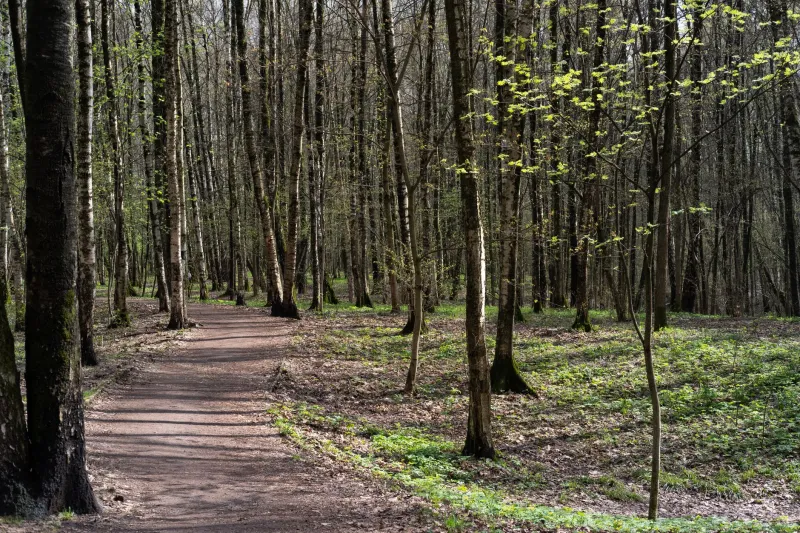
Belarus has some of Europe's last remaining ancient forests, and Białowieża Forest — shared with Poland — is the most famous of them. If you're coming from the US, this place will recalibrate your sense of what old actually means. The trees are enormous. The bison are real. The silence is the kind that makes city people uncomfortable.
But don't just do a rushed day trip from Minsk. Book a couple of nights in the nearby town of Kamyanyets or across the border in the Polish side if your itinerary allows. Walking the forest at dawn, before the tour groups arrive, is a completely different experience from an afternoon visit.
For something less visited, the Narachanski National Park in the northwest is worth the detour. Lake Narach is the largest lake in the country, and in the summer it draws Belarusian vacationers who've been going there since Soviet times. The sanatoriums around the lake have that wonderfully strange retro-resort energy that Belarus does better than almost anywhere. You'll feel like you've stepped sideways in time.
Hrodna Is the City You Should Have Been Talking About
Minsk gets all the attention, but Hrodna — sitting near the Polish and Lithuanian borders — is the city that quietly wins over almost everyone who visits. It escaped the worst of World War II's destruction, which means it still has a genuine old town with actual historical texture. Catholic churches, a castle, narrow streets that don't feel like they were designed for Soviet traffic flow.
Aleksei, who lives in Chicago now, spent three days in Hrodna on his last trip and came back slightly evangelical about it. "I kept thinking, why does nobody talk about this place? It's gorgeous. The food was better, the vibe was more relaxed, and I felt like I was seeing something real rather than a city that was rebuilt from scratch."
The restaurants in Hrodna have also gotten genuinely good in recent years. Look for spots serving traditional Belarusian food without the tourist-menu treatment — local soups, fermented drinks, seasonal dishes that change depending on when you visit.
Timing Your Trip Actually Matters
Belarus has four seasons that each deliver a genuinely different country. Summer is the obvious choice — long days, dacha culture in full swing, berries and mushrooms in the forests — but it's also when everything is most crowded and most expensive by local standards.
Late spring (May and early June) is arguably the sweet spot. The landscape is intensely green, the weather is mild, and you'll avoid the peak summer rush. Fall is also spectacular — the forests go amber and rust in a way that will make you embarrassingly emotional if you have any connection to the place.
Winter trips are for the brave, but diaspora members who've done it describe a specific kind of Belarusian winter atmosphere — the early dark, the warmth of indoor spaces, the food that gets heavier and better — that's hard to replicate in any other season.
Practical Notes From People Who've Actually Done It
A few things the people we talked to wished they'd known before going:
Rent a car. Public transportation will get you between major cities, but the places worth seeing are often down roads that buses don't serve. Having a car changes the entire trip.
Learn twenty words of Belarusian before you go. Even if most people in cities speak Russian, making the effort with Belarusian — especially outside Minsk — lands differently. People notice, and they respond warmly.
Budget more time than you think you need. Almost everyone who goes back says they wished they'd stayed longer. Build in at least a couple of unscheduled days so you can follow a recommendation, take a wrong turn, or just sit somewhere and let the place catch up with you.
Bring something from here to leave there. Several diaspora travelers mentioned bringing small gifts — not expensive things, just American candies, a local coffee blend, something from wherever they live now — to share with family or people they meet. It's a small gesture that opens a lot of doors.
The trip back to Belarus is rarely what you expect it to be. It's usually more complicated, more emotional, and more surprising than you planned for. But the people who've done it will tell you the same thing: go. Go soon. Go past Minsk. The country is waiting.