Raising Little Belarusians in Big American Cities: What Actually Sticks and What Totally Doesn't
There's a moment that almost every Belarusian parent in America knows. You're in the kitchen, making draniki from memory, and your eight-year-old wanders in, sniffs the air, and asks if you're making hash browns. You feel something shift inside you — not quite grief, not quite frustration, but somewhere in that uncomfortable neighborhood between the two.
You want your kid to know where they come from. You want Belarus to feel real to them, not like a chapter in a geography textbook they'll forget by Thursday. But between soccer practice, homework, and the relentless gravitational pull of American pop culture, how do you actually make that happen?
Belarusian-American families across the country are figuring this out in real time, and the approaches they're taking are far more inventive — and honest about failure — than any official cultural preservation guide would suggest.
The Cousin Connection: Building a Living Bridge
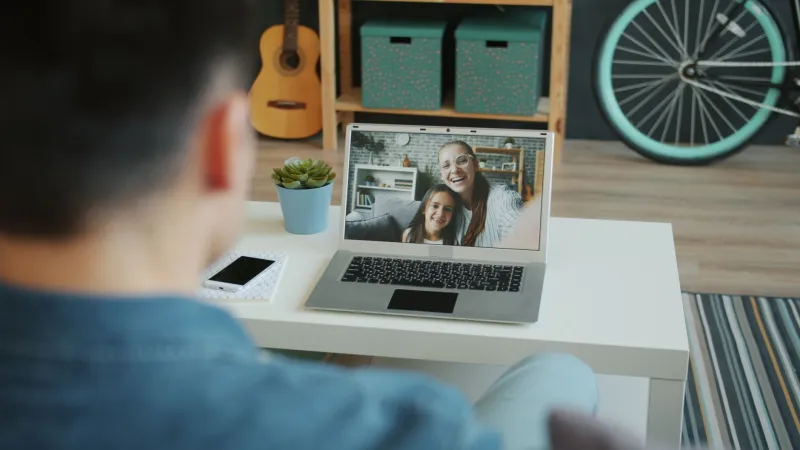
One strategy that keeps coming up in conversations with diaspora parents is what some families informally call a "heritage pact" — a structured, ongoing connection between their American kids and cousins or family friends still living in Belarus.
It sounds simple, but the execution matters. A yearly phone call on New Year's isn't going to cut it. Families who report real success tend to build something more like a pen pal relationship with actual stakes. Kids exchange voice messages about their weeks, share photos of what they're eating, even play the same online games across time zones. The goal isn't to manufacture nostalgia — it's to make Belarus feel populated by real, interesting people rather than abstract relatives on a map.
One mom in Chicago described it this way: her daughter was completely uninterested in Belarusian culture until she started messaging a second cousin in Brest who happened to be obsessed with the same K-pop group. Suddenly, Belarus had a person in it. A funny, relatable, slightly chaotic teenager who also loved BTS and complained about school. That connection cracked something open.
The lesson isn't subtle: culture travels better through relationships than through curriculum.
TikTok as a Heritage Tool (No, Really)
If you'd told Belarusian grandmothers twenty years ago that a Chinese-owned short-video app would become a vehicle for preserving their culture, they would have looked at you like you'd lost your mind. And yet.
A growing number of Belarusian-American teens and young adults are finding Belarus on TikTok — through creators posting about traditional embroidery, through videos of Kupalle celebrations, through mini-documentaries about Minsk street art. And some parents are deliberately using this as an entry point rather than fighting it.
The approach is less "sit down and watch this educational video" and more strategic ambient exposure. Leave a Belarusian folk music playlist running on a Saturday morning. Follow a few Belarusian creators together and comment on them. Let your kid discover something on their own and then be ready to go deeper when they do.
What doesn't work, by nearly universal parent consensus, is forced cultural homework. The moment it feels like a chore, you've lost. One father in New Jersey described spending an entire weekend building what he thought was a beautiful interactive timeline of Belarusian history, complete with printed photos and laminated cards. His kids used it as a frisbee. "You can't schedule belonging," he said, laughing at himself. "I learned that the hard way."
Language: The Longest Game
Belarusian language transmission in diaspora families is its own complicated universe. Most families are navigating at least two languages already — English at school, often Russian at home — and adding Belarusian into that mix can feel like asking someone to juggle while riding a bicycle.
Some parents insist on Belarusian-only hours at home. Others use it exclusively for specific rituals — prayers, bedtime phrases, certain foods always called by their Belarusian names. A surprising number of families are turning to online tutors who specialize in working with diaspora kids, creating low-pressure spaces where language learning doesn't come loaded with parental anxiety.
What the more successful families seem to share is a willingness to let the language be imperfect and alive rather than a museum piece. Kids who hear Belarusian spoken joyfully, messily, and often — even badly — develop a different relationship with it than kids who only encounter it in formal settings. It becomes part of the texture of home rather than evidence of parental expectation.
Food as the Longest Memory
Ask any Belarusian-American adult what first made them feel connected to their heritage, and there's roughly a 70% chance the answer involves food. Draniki, borscht, cold cuts on dark bread at holiday gatherings, the specific smell of beet kvass fermenting in a jar on the counter.
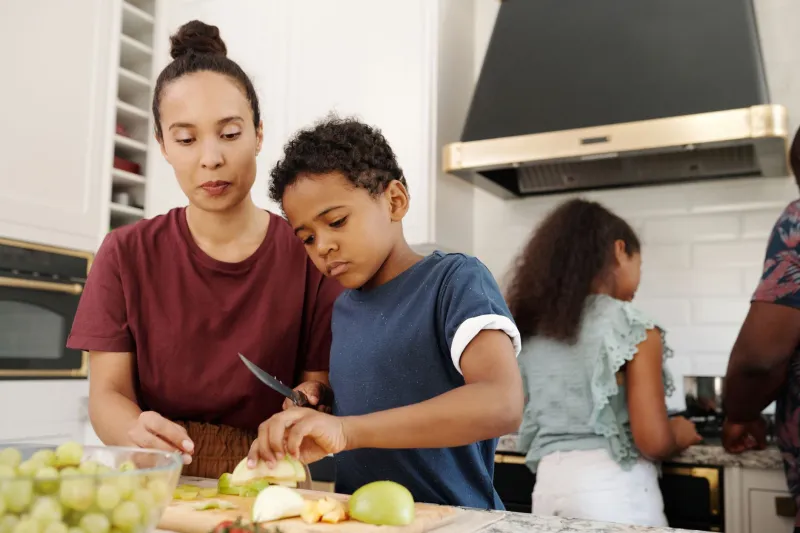
Savvy parents are leaning into this hard. Not just by cooking traditional dishes, but by making kids part of the process. Grating potatoes together. Learning the right ratio for the batter. Arguing — lovingly, loudly — about whether your version or your grandmother's version is correct. That argument, by the way, is itself a form of cultural transmission. You're teaching your child that this food has a history worth arguing about.
Some families have started recipe journals — physical notebooks where dishes get written down in both Belarusian and English, with notes about where the recipe came from and what occasions it belongs to. It's part cookbook, part family archive. Kids who might roll their eyes at a lecture about Belarusian history will often sit down and read a handwritten note from a great-aunt about how she made holubtsy during Soviet-era food shortages. Story beats lecture every single time.
What Failure Looks Like (And Why It's Useful)
Not everything works, and the parents willing to admit this are often the most interesting to talk to. There are the Belarusian Saturday school enrollments that lasted three weeks before the kids staged a quiet revolt. The cultural camps that backfired because the kids felt othered rather than proud. The painstakingly planned "heritage nights" that devolved into everyone just watching Netflix.
But even the failures tend to teach something. A failed Saturday school enrollment led one family in Seattle to start a much smaller, looser monthly gathering with three other Belarusian families — no curriculum, just food and kids running around together. That's been going for four years now. The kids are friends. Belarus is something they share, not something they're taught.
That might be the real secret, if there is one. Heritage doesn't get passed down through information delivery. It gets passed down through belonging — through the feeling that this thing connects you to people you love and want to be close to.
Your kid doesn't need to memorize the dates of Belarusian independence. They need to feel like Belarus is somewhere real people live, somewhere their family has roots, somewhere that has something to do with who they are.
The draniki can help with that. So can the cousin in Brest who also loves BTS. So can the messy, imperfect, deeply human work of figuring it out as you go.