Mom Speaks Belarusian, I Speak Back in English: The Language Gap Tearing at Diaspora Families — and the Parents Finding Ways Through It
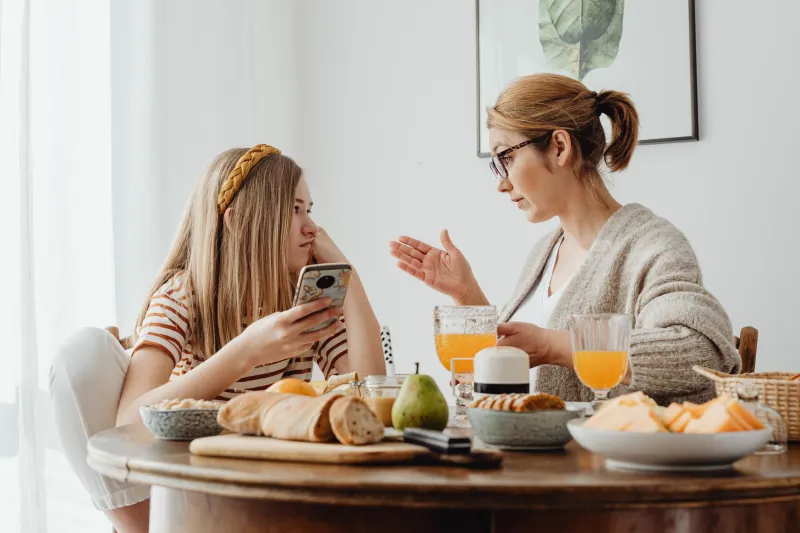
There's a particular kind of silence that Belarusian parents in America know well. You say something in Belarusian — maybe just asking your kid to come to dinner — and they answer in English. Not rudely. Not even deliberately. Just... in English. Because that's the language their brain lives in now.
For a lot of Belarusian immigrants, that moment lands somewhere between heartbreak and resignation. You came here for a better life. You got it. And somewhere in the process, you watched a piece of home slip through your fingers in real time.
The Guilt Is Real, and It's Heavy
Talk to enough Belarusian parents in the diaspora and a pattern emerges fast. Almost all of them intended to raise bilingual kids. Almost none of them feel like they fully pulled it off.
Natalya, who moved to Chicago from Minsk in 2009 and has two kids — ages nine and twelve — puts it bluntly: "I spoke to them in Belarusian when they were babies. Then they started school, they started making friends, and suddenly Belarusian felt like it was embarrassing them. I didn't want them to feel like outsiders, so I started slipping into English at home. And now here we are."
Here we are is a phrase that comes up a lot in these conversations. It carries the weight of a hundred small decisions that seemed reasonable at the time but added up to something nobody planned for.
The guilt isn't just about language, either. For many Belarusian parents, the language is the culture. It's the jokes that don't translate. It's the lullabies. It's the specific way you'd say something tender to a grandmother. Lose the language, and you lose the texture of all of that — not just the words.
Why It's Harder Than It Looks
Belarusian is already in a complicated position even back home. Decades of Russification mean that many Belarusians themselves grew up speaking Russian as their primary language, with Belarusian occupying a kind of symbolic, politically charged space. Some parents who immigrated to the US are themselves more comfortable in Russian than in Belarusian — which adds another layer of complexity to the whole project of "passing on the language."
And then there's just the math of daily life in America. Kids spend seven hours a day at school in English. Their friends text in English. TikTok is in English. The sheer volume of English that floods into a kid's day makes any minority language feel like an uphill battle, no matter how committed the parents are.
Dmitry, a father of three in New Jersey who immigrated from Hrodna in 2005, tried the strict approach for a while — Belarusian only at the dinner table, Belarusian-language cartoons on weekends. "My youngest just started crying one night and said she felt like she was stupid because she couldn't understand what we were saying to each other," he recalls. "That was the end of the strict rule."
The Parents Who Gave Themselves Permission to Let Go
Some families have made a conscious decision to stop fighting the language battle — and found a kind of peace in it.
Anna, who lives in Seattle and came to the US as a teenager herself, has a twelve-year-old son who speaks almost no Belarusian. She's stopped feeling bad about it. "I decided that culture isn't just language," she says. "We cook Belarusian food together every Sunday. He knows what Kupalle is. He knows the history. He knows where he comes from. That's not nothing."
It's a pragmatic philosophy that a lot of second-generation immigrant families across many cultures have landed on — and it's worth taking seriously. Food, holidays, family stories, music: these are all transmission belts for identity, and they don't require fluency.
The Creative Workarounds That Are Actually Working
Not everyone has given up on the language itself, though. And some of the solutions people are finding are genuinely inventive.
There's a small but growing community of Belarusian-American parents who've turned to TikTok and YouTube as unlikely allies. A handful of creators — some based in the US, some still in Belarus or in the broader diaspora — have started making short, funny, accessible Belarusian-language content that doesn't feel like homework. Slang videos. Meme translations. Thirty-second clips that teach a phrase in a way that actually sticks.
"My daughter would never sit through a Belarusian grammar lesson," admits Svetlana, a mother in Philadelphia. "But she watched this one video about Belarusian internet slang like four times because it was hilarious to her. She's been using one of the phrases ironically with her friends. I'll take it."
Other families have found Belarusian Saturday schools — informal community programs that exist in a few major US cities — to be surprisingly effective, not because of the language instruction itself, but because of the social component. Kids who might resist Belarusian at home are sometimes more willing to engage with it when there are peers involved and it doesn't feel like a parent-imposed chore.
Then there are the grandparents. For families lucky enough to have babusyas and dzyadulyas either living with them or visiting regularly, the language gap sometimes narrows on its own — because kids genuinely want to communicate with people they love. Necessity turns out to be a better teacher than curriculum.
What Gets Lost, What Gets Kept
There's no clean resolution here, and it would be dishonest to pretend there is. Some things do get lost. The generation of Belarusian-Americans growing up right now will mostly not dream in Belarusian. They won't catch every nuance of a poem by Yakub Kolas or instantly understand what their great-aunt is saying on a video call.
But something is being kept, too. It's just messier and more improvised than the version immigrant parents imagined when they were still in Belarus, still picturing what their American family would look like.
It looks like a Sunday kitchen full of the smell of draniki. It looks like a kid who doesn't speak Belarusian but tears up watching footage of the 2020 protests because they understand, somehow, what's at stake. It looks like a twelve-year-old who uses one piece of Belarusian internet slang ironically with her American friends and has no idea that she's carrying something forward.
Natalya, the mother from Chicago, says something that sticks: "I used to think passing on the language was the whole thing. Now I think it's one thing. My kids know they're Belarusian. They're proud of it. They're curious about it. Maybe that's the seed. Maybe the language comes later, or maybe it doesn't. But the seed is there."
For a lot of Belarusian diaspora parents, that's what they're holding onto. Not fluency. Not perfect transmission. Just the seed.