The Invisible Safety Net: Inside the Underground Networks Keeping Belarusian Immigrants Afloat
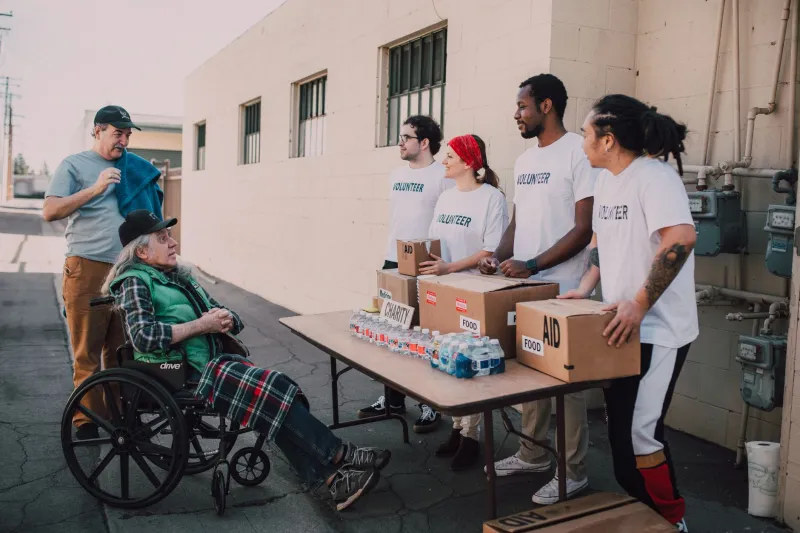
Somewhere in a Chicago suburb right now, a Belarusian woman who arrived six weeks ago is sleeping in an apartment she found through a friend of a friend of her cousin's former coworker. She has a job interview lined up — not from Indeed, but because someone in a WhatsApp group vouched for her. Her landlord is also Belarusian. So is the person who picked her up from O'Hare.
None of this was arranged through a nonprofit. No caseworker logged it in a database. American immigration infrastructure has essentially no idea it happened.
This is how Belarusian immigrant communities in the United States actually work — and it's been this way for decades.
Built Before Anyone Had a Name for It
Mutual aid isn't a new concept, and immigrant communities of all backgrounds have always leaned on each other to survive. But the Belarusian version of this has a few specific characteristics that make it unusually efficient and unusually invisible.
Part of it is historical. Belarus spent much of the 20th century under Soviet governance, where official channels were frequently useless, hostile, or both. Getting things done meant knowing the right person. Asking favors, returning favors, keeping mental tallies of who owed what to whom — this wasn't corruption so much as basic social infrastructure. You didn't trust the system. You trusted your network.
That instinct didn't vanish when people left. It came with them on the plane.
"We don't really think of it as organizing," says one Belarusian American in New Jersey who's been in the country for nearly twenty years and has helped orient dozens of newcomers. "We just think of it as what you do. Someone arrives, you help them. Someone helped you when you arrived. That's the whole thing."
How the System Actually Runs
At the most basic level, the network operates through layered personal relationships — family connections, friendships from back home, church communities, and increasingly, online groups. Telegram channels and WhatsApp threads have become the connective tissue of the modern version, allowing information to move fast across cities and time zones.
Housing is often the first thing sorted. A newcomer puts out word through their existing contacts, and within days — sometimes hours — they're matched with someone renting a room, someone with a couch available short-term, or someone who knows of an opening in a building where other Belarusians already live. These arrangements are often informal, frequently below market rate, and built entirely on trust and reputation.
Employment works similarly. Job leads circulate through the same channels. Someone who manages a warehouse, owns a small business, or works in a field where they can refer people will quietly flag openings before they're ever posted publicly. References are given person-to-person. Employers within the community often hire almost exclusively through these word-of-mouth pipelines.
Then there's the information layer — the stuff that's genuinely hard to Google when you're new. Which DMV office is fastest. Which doctor speaks Russian. Which neighborhoods to avoid. Which American workplace customs will trip you up if nobody warns you. This knowledge circulates constantly, updated in real time by people who've just figured something out and pass it along.
Why American Institutions Miss It
Immigrant services in the US are largely built around a model of formal intake — you show up, you register, you get assigned a caseworker, you're tracked through a system. That model assumes people arrive without resources and need external scaffolding to function.
Belarusian networks scramble that assumption almost completely. By the time someone might qualify for formal assistance, they often already have housing, income, and a functioning social circle. They don't show up in the data because they never needed to enter the pipeline.
This creates a strange paradox. The community appears self-sufficient — because it largely is — but that invisibility also means its needs go unrecognized. When things go wrong inside the network, there's often no external backstop. The informal system is strong, but it has limits.
The Cracks in the Net
For all its efficiency, the informal network has real vulnerabilities.
The biggest one is scope. These systems work well for people who already have at least one connection into the community. But someone who arrives truly alone, without any prior ties, can find the network nearly impossible to access. There's no front door. You can't just knock.
There's also the question of what happens when a favor goes sideways. Because these arrangements are built on personal trust rather than contracts, disputes are awkward and messy. If a housing arrangement falls apart, there's no formal recourse. If someone doesn't repay a financial favor, the consequences are social rather than legal — which can fracture relationships and, by extension, fracture someone's access to the broader network they depend on.
And then there's the emotional weight of it. The expectation that you will help, and that you will be helped, can curdle into obligation that feels suffocating. Longtime members of the community sometimes describe a kind of burnout — the sense that they've been the resource for too many people for too long, with no institutional support to share the load.
"At some point you've found apartments for eight people and none of them have asked how you're doing," one longtime community member said, only half-joking.
A Newer Wave, A Shifting Network
The political upheaval following Belarus's 2020 elections sent a new wave of migrants into the diaspora — people who left quickly, often with less preparation and fewer existing connections in the US than previous generations. This has strained the networks in new ways and also, in some cases, reinvigorated them.
Younger arrivals are more likely to have built their initial connections online before ever setting foot in the country, meaning they sometimes arrive with a ready-made digital community even if they don't know anyone physically nearby. The Telegram infrastructure in particular has expanded dramatically, creating something closer to a searchable, semi-public resource than the purely private, word-of-mouth system that existed before.
Older members of the community have mixed feelings about this. Some see it as a natural evolution that makes the network more accessible. Others worry that the intimacy and accountability that made the old system work — the fact that everyone knew everyone, and your reputation traveled with you — gets diluted when the community scales up and goes digital.
What the Rest of Us Can Learn From It
There's something genuinely instructive in how these networks function, even for people with no connection to Belarus whatsoever. The combination of radical practicality, long memory for favors, and deep cultural trust in personal relationships over institutions has produced something that, at its best, is more responsive and more human than almost any formal system could be.
It's not perfect. It's not always fair. It doesn't catch everyone.
But for the woman who just landed at O'Hare with two suitcases and the phone number of someone she's never met — it's already working.