More Than a Ring: The Hidden World of Obligations, Rituals, and Expectations Inside a Belarusian Wedding

Photo by Photo by Marius Muresan on Unsplash on Unsplash
So you got engaged to someone with Belarusian roots. Congratulations. You've probably already started thinking about venues, catering, and whether or not to do a DJ or a band. Cute. What you may not have accounted for is the quiet but insistent gravitational pull of several centuries' worth of tradition that is now, technically, your problem too.
Belarusian weddings are not a single afternoon. They never really were. And for diaspora families scattered across cities like Chicago, New York, and Minneapolis, the question of how much of that tradition to carry forward — and at what cost — is one that comes up at almost every engagement dinner, whether anyone planned to discuss it or not.
The Myth of the Simple Celebration
In Belarus, the classic wedding wasn't a one-day event. It was a multi-day ritual with a defined structure: the matchmaking visit (svaty), the engagement gathering, the pre-wedding farewell party for the bride (dzyavochnik, a kind of bachelorette equivalent), the ceremony itself, and then a second-day celebration where the party continued and guests were expected to show back up. Each stage came with its own customs, its own symbolic foods, its own songs, and — crucially — its own set of gifts and obligations.
For families who immigrated decades ago, many of these layers got compressed or quietly dropped. But they didn't disappear entirely. They live in the expectations of older relatives, in the half-remembered stories grandmothers tell at kitchen tables, and in the very specific look a Belarusian aunt gives you when she finds out there won't be a ransom game at the reception.
What the Ransom Game Actually Is (and Why It Matters)
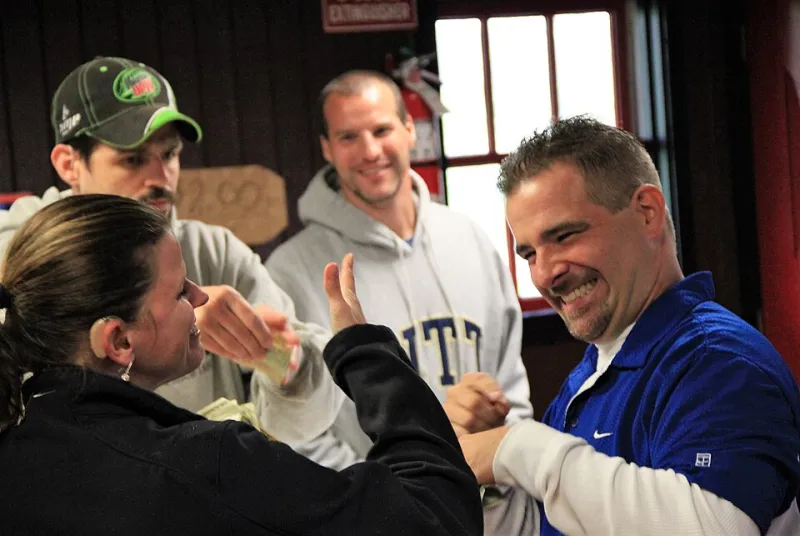
If you've never heard of vykup, prepare yourself. This is the pre-ceremony ritual where the groom and his groomsmen arrive at the bride's family home and are literally blocked from entering by her female relatives and friends. They have to perform tasks, answer questions, and — yes — pay small symbolic ransoms to proceed. It's theatrical, it's chaotic, and it's genuinely hilarious when it goes well.
But here's the thing: it also signals something real. The groom's willingness to show up, play along, and demonstrate effort in front of her entire family is a kind of public commitment. It's not about the money in the envelope. It's about whether he's the kind of person who shows up and does the work. For a lot of Belarusian families, watching a future son-in-law fumble through a folk song challenge or answer trivia questions about his fiancée says more than a rehearsed wedding speech ever could.
When American partners encounter this for the first time, reactions range from delighted to mildly panicked. One woman from Ohio, who married into a Belarusian-American family in Cleveland, described it as "the most fun I've ever had being completely humiliated." Her husband spent twenty minutes trying to identify his wife's handwriting on a sample card before her cousins finally took pity on him.
The Bread, the Salt, and the Weight of Welcome
The bread-and-salt greeting — khlebam-sollyu — is one of those traditions that has survived immigration remarkably intact. The parents of the couple welcome them with a round loaf of bread and salt; the newlyweds each take a bite. Whoever bites off the bigger piece, according to folklore, will be the dominant partner in the marriage. Cue the competitive eating.
But beyond the humor, this ritual carries real emotional weight for families who've held onto it across generations and time zones. The bread is usually homemade. Someone's mother or grandmother woke up early to bake it. The salt dish might be a family heirloom. The act of presenting it to a child on their wedding day is not casual — it's a handoff, a blessing, a piece of something very old being offered to something very new.
For American partners who didn't grow up with any of this, the challenge is learning to receive it with the seriousness it deserves, even when you're also a little nervous about biting into bread in your wedding outfit.
The Guest List Nobody Asked For
Belarusian weddings traditionally involve the extended family in a way that American weddings often don't. And "extended" is doing a lot of work in that sentence. We're talking second cousins, family friends who've known the bride since she was three, neighbors from the old apartment building back home, and a rotating cast of relatives whose exact relationship to anyone present is genuinely unclear.
For diaspora couples trying to plan a wedding on a realistic American budget, this is where things get complicated fast. Venue capacity, catering costs, and per-head pricing don't care about tradition. The negotiation between what families expect and what couples can actually afford is one of the most quietly stressful parts of the whole process.
Some families find creative solutions. Smaller ceremonies followed by larger, more casual celebrations at someone's home. Potluck-style receptions where relatives contribute dishes rather than just attendance. Backyard gatherings that trade venue elegance for the kind of noise and warmth that a rented hall could never quite replicate.
What Gets Lost, What Gets Kept
Here's the honest part: not everything survives the translation. Some customs fade because nobody in the younger generation knows the songs well enough to sing them. Some disappear because the symbolic objects — specific types of embroidered rushnyky (ritual cloths), particular regional foods — are simply not accessible in suburban America. And some get quietly set aside because a couple has decided that their wedding is going to be theirs, even if that means disappointing someone.
That's a real and legitimate choice. But diaspora families who've done this often describe a specific kind of wistfulness about it later — not regret exactly, but a sense that something slipped away that they can't quite get back.
On the other side, there are couples who went deep into the traditions and found something they didn't expect: a feeling of connection to people they'd never meet, to places they'd only seen in photographs, to a version of themselves that existed before immigration and assimilation and American life took over. One Belarusian-American woman who incorporated a full vykup into her Brooklyn wedding said her grandmother cried through the whole thing — not from sadness, but from recognition.
The Real Price
So what does a Belarusian wedding actually cost? In dollars, it varies wildly. In terms of time, negotiation, emotional labor, and the occasional family argument about whether the second-day celebration is mandatory — considerably more.
But the couples who navigate it well tend to say the same thing: the cost was worth it because the meaning was worth it. The rituals aren't just decorative. They're doing something. They're connecting people across generations, across oceans, across the enormous distance between who a family used to be and who they are now.
And sometimes, they're just really fun. Ask anyone who's watched a groom try to serenade his new mother-in-law in broken Belarusian at eleven o'clock at night with a borrowed accordion.
That's the part nobody puts in the wedding budget. And it's usually the part everyone remembers.