Hands That Remember: The Fight to Keep Belarusian Sign Language Alive
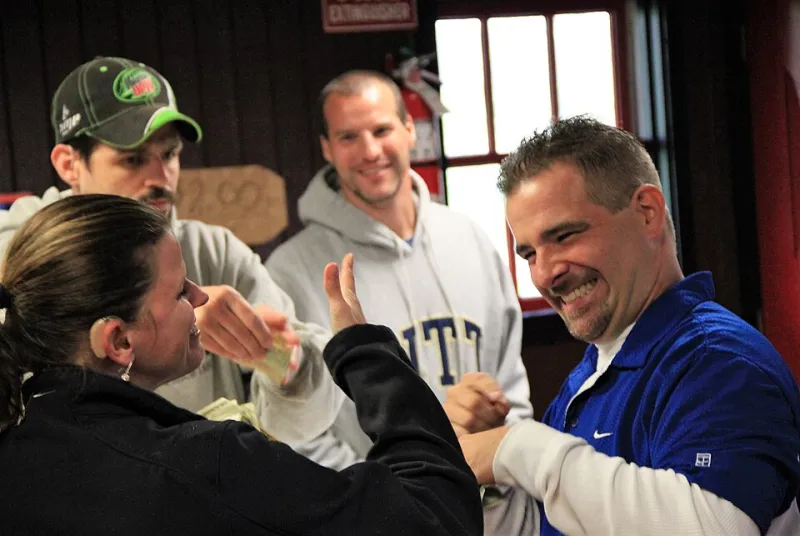
Photo: daveynin, CC BY 2.0, via Wikimedia Commons
There's a moment in every conversation with someone from Belarus's Deaf community where the same thought tends to surface: how is it possible that an entire language — one with its own grammar, its own humor, its own way of describing a gray Minsk winter — has stayed so invisible for so long?
Belarusian Sign Language, known locally as BelZhM (Беларуская жэставая мова), isn't just a communication tool. It's a cultural archive. And like so many things in Belarus right now, keeping it alive takes more stubbornness than it probably should.
A Language That Doesn't Get a Seat at the Table
Here's something that might surprise you: Belarus technically recognizes sign language. It's listed in official documents. There are interpreters — sometimes — at government events. On paper, accessibility exists.
In practice, it's a different story.
Deaf Belarusians have long described a system that acknowledges their language just enough to avoid criticism while doing very little to actually support it. Interpreter shortages are chronic. Educational materials for Deaf children are outdated or nonexistent. And crucially, BelZhM itself has never received the kind of formal linguistic documentation and standardization that would help it survive generational gaps.
What makes this especially complicated is that Belarusian Sign Language is genuinely distinct from Russian Sign Language — even though the two communities have been pushed together politically and institutionally for decades. Just as spoken Belarusian has spent years being overshadowed by Russian, BelZhM has faced pressure from RSL, which tends to dominate in official and educational settings. The result is a kind of quiet erosion. Young Deaf Belarusians sometimes grow up more fluent in RSL than in their own regional sign language, not because BelZhM is inferior, but because the infrastructure around them defaults to Russian.
What Gets Lost When a Sign Language Disappears
This is where it helps to think about what sign languages actually are — because they're not just spoken languages translated into hand gestures. They're independent linguistic systems that evolved organically within Deaf communities, carrying their own idioms, regional dialects, and cultural references.
BelZhM has signs that reflect specifically Belarusian realities. There are signs tied to local foods, to Soviet-era experiences, to the particular rhythm of life in a country that spent centuries at the crossroads of empires. When elderly Deaf Belarusians use BelZhM, they're not just communicating — they're transmitting a way of seeing the world that is genuinely irreplaceable.
Linguists who study sign language endangerment will tell you that the loss of a sign language is every bit as significant as the loss of a spoken one. The community loses not just words but conceptual frameworks — ways of organizing experience that exist nowhere else.
The Community Holding It Together
So who's actually doing the work?
A lot of it falls on informal networks. Deaf clubs — often operating out of the same kinds of Soviet-era community spaces that have housed minority culture in Belarus for generations — function as both social hubs and informal language schools. Older members pass signs down to younger ones. Stories get told. Jokes land in BelZhM that would lose everything in translation.
In recent years, some of this has moved online. Video platforms have been a quiet revolution for Deaf communities globally, and Belarusian Deaf people have been no exception. Small YouTube channels, Instagram accounts, and Telegram groups have become spaces where BelZhM gets documented, shared, and sometimes debated. Someone will post a video using a particular regional sign, and the comments fill up with people from different parts of the country weighing in on whether that's how they say it too.
It's crowdsourced linguistics, basically. And it's working.
The Diaspora Connection
After 2020, when Belarus saw massive protests followed by a brutal crackdown, hundreds of thousands of people left the country. The Deaf community was no exception.
Deaf Belarusian emigrants ended up in Warsaw, Vilnius, Berlin, and yes — cities across the United States. And something interesting happened: distance made the language matter more, not less.
In diaspora communities, BelZhM has become a marker of identity in a way it sometimes wasn't back home. When you're a Deaf Belarusian in Chicago or New York, surrounded by American Sign Language and the occasional RSL speaker, using BelZhM becomes a deliberate choice. It becomes a statement.
Diaspora groups have started organizing online BelZhM sessions, partly to help members stay fluent and partly to connect with newly arrived Deaf Belarusians who might be isolated. There's a warmth to these gatherings that people describe as hard to replicate — a shared recognition of something specific and fragile that they're all trying to hold onto together.
Accessibility as a Political Act
It would be easy to frame this purely as a disability rights issue, and it is that. But in the Belarusian context, it's also something more.
Language preservation in Belarus has always carried a political charge. Speaking Belarusian rather than Russian is understood as a cultural stance. Embroidering traditional patterns is understood as a cultural stance. And for the Deaf community, insisting on BelZhM over RSL — insisting that their language is distinct, that it matters, that it deserves documentation and support — sits in that same tradition of quiet resistance.
Accessibility, when it's being denied or ignored by a state apparatus, stops being just a practical question and starts being a justice one.
Deaf activists in Belarus have been pointing this out for years. They want interpreters at civic events not just as a courtesy but as a recognition that they are full participants in Belarusian public life. They want BelZhM taught in schools not just for Deaf children but as a subject available to hearing Belarusians who want to learn it. They want their language on the record — documented, studied, respected.
What Hearing People Can Actually Do
If you're a hearing person reading this — in Minsk, in Milwaukee, wherever — there are some genuinely useful things you can do beyond just being aware this community exists.
Seeking out and sharing BelZhM content online helps those videos and channels reach wider audiences. Supporting organizations that fund sign language documentation and Deaf education in Eastern Europe makes a material difference. And if you're part of the Belarusian diaspora in the US, asking whether your local Belarusian cultural events are accessible to Deaf community members is a question worth raising.
The Deaf Belarusian community isn't asking to be rescued. They've been doing this work themselves for a long time, with limited resources and limited recognition. What they're asking for is to be seen — to have their language acknowledged as real, their culture acknowledged as worth preserving, and their voices (in every form those voices take) included in the conversation about what Belarus is and what it's becoming.
That seems like a pretty reasonable ask.