No, It's Not Russia: The Exhausting, Hilarious, Deeply Personal Battle of Being Belarusian in America
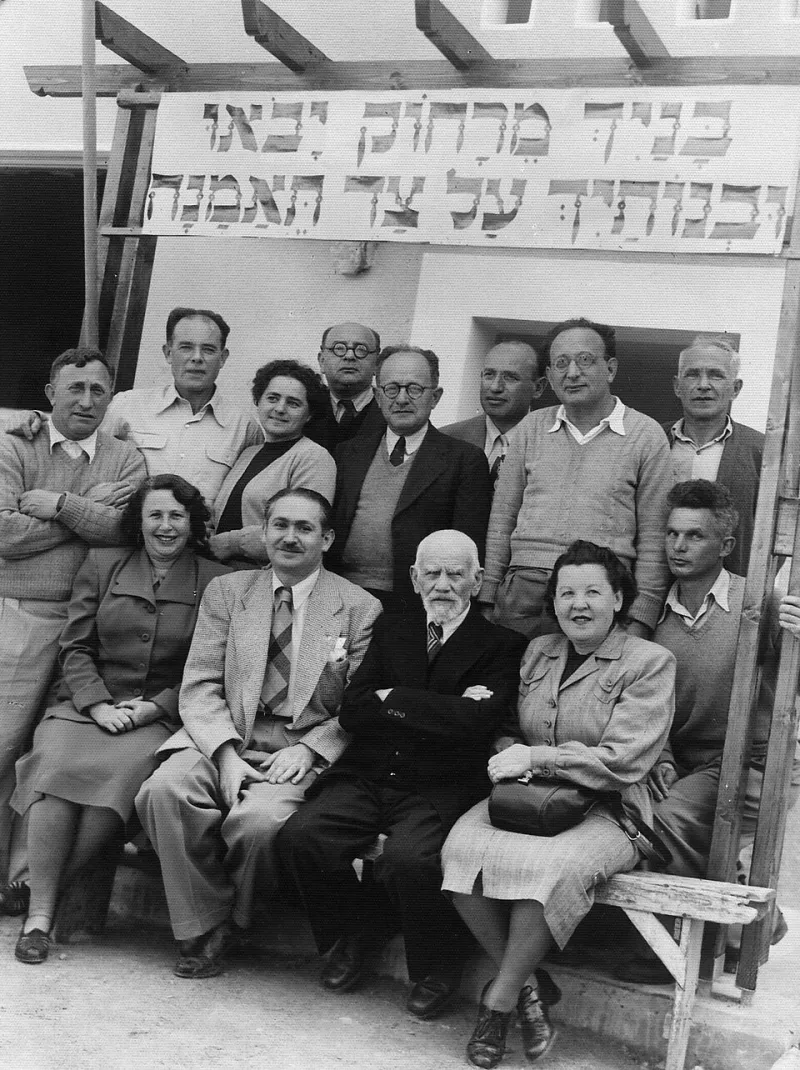
Photo: Unknown, Public domain, via Wikimedia Commons
Let's set the scene. You're at a work happy hour, someone asks where your parents are from, and you say Belarus. There's a pause. A very specific pause — the kind where you can actually watch a person's brain cycling through a mental Rolodex of countries they half-remember from a high school geography class they definitely slept through. Then comes the response.
"Oh, Belarus! That's near... Russia, right?"
And you smile. Because you've been here before. You'll be here again.
For Belarusian-Americans, this moment is practically a rite of passage. It's so universal within the community that it's become something between a punchline and a grievance — the kind of shared experience that bonds people at diaspora meetups more reliably than food or music ever could.
The Geography Lesson Nobody Asked For (But You're Giving It Anyway)
Here's what most Americans don't know, through absolutely no fault of their own: Belarus is a landlocked country in Eastern Europe, bordered by Russia to the east, Ukraine to the south, Poland to the west, and Lithuania and Latvia to the north. It's roughly the size of Kansas. It has about 9.4 million people. It has a distinct language, a distinct culture, a distinct history, and it has been a sovereign nation since 1991.
It is not Russia.
It is also not Bulgaria — a mix-up that happens more than you'd think, usually with people who are at least trying. And it is certainly not still part of the Soviet Union, though you'd be surprised how often that assumption quietly lurks beneath the surface of a conversation.
"My coworker once asked me if we had smartphones," says Tanya, a graphic designer in Chicago whose family emigrated from Minsk in the late 1990s. "I told her I grew up watching SpongeBob just like she did. She seemed genuinely shocked."
This is the particular flavor of erasure that Belarusian-Americans navigate: not outright hostility, not malice, just a comfortable, well-meaning blankness. Belarus doesn't show up in American movies. It rarely makes the news unless something political and dramatic is happening. It doesn't have a cuisine that's made it onto the American food map the way Ukrainian borscht or Polish pierogies have started to. For most Americans, it simply doesn't exist as a real, textured place with real, textured people.
When "Close Enough" Isn't Close Enough
The Russia confusion is the big one, and it's complicated by a few things. The Belarusian and Russian languages are closely related — close enough that many Americans who've heard both can't distinguish them. The countries share a long border and a deeply entangled political history. And since 1994, Belarus has been governed by Alexander Lukashenko in a way that has kept it tightly orbiting Russia's political gravity, which doesn't help the perception problem.
But here's the thing that Belarusian-Americans will tell you, usually with some feeling: cultural proximity is not the same as cultural identity. Canadians and Americans share a language, a border, and a whole lot of pop culture — nobody's out here calling Canadians Americans.
"People hear the accent and they just... file you under Russian," says Dmitri, a software engineer in Seattle whose parents came over in the early 2000s. "And I get it, kind of. But it still stings. My grandparents spoke Belarusian. My mom makes machanka. We're not the same thing."
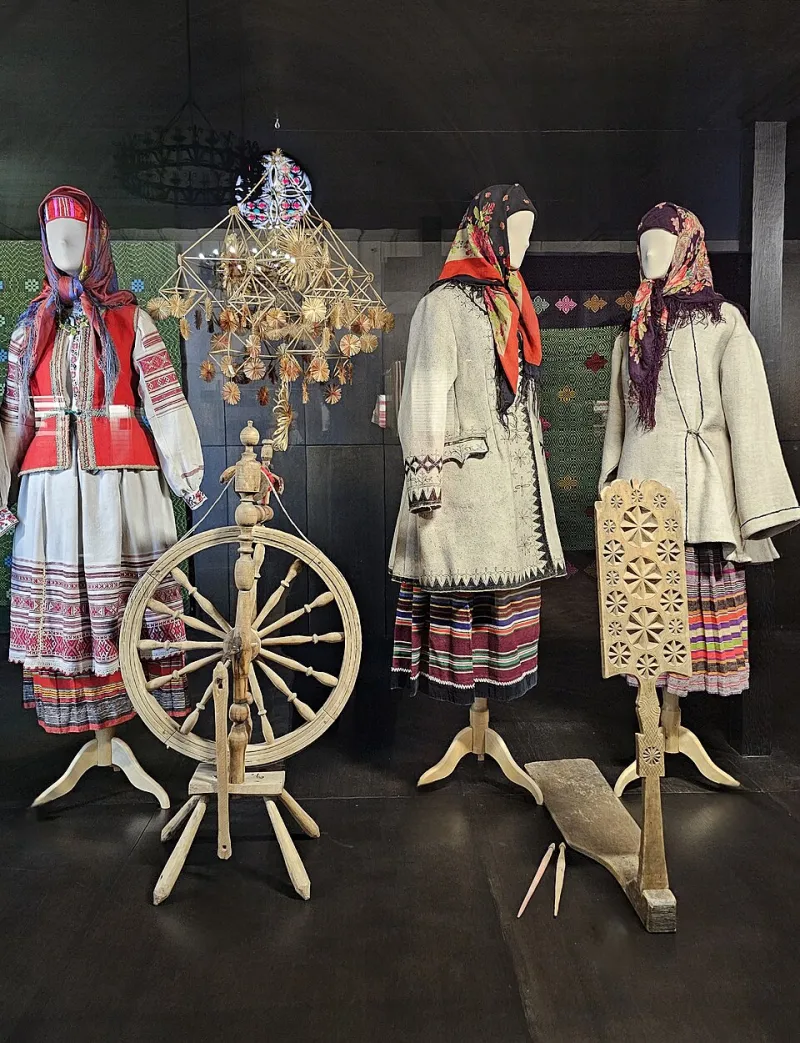
Machanka, for the record, is a hearty pork gravy served over thick pancakes that would make a French crepe feel deeply insecure. It is very Belarusian. It is not Russian.
The Soviet Hangover
There's another layer here that's worth sitting with. For many Americans, Eastern Europe is still mentally frozen sometime around 1985 — all gray concrete, fur hats, and bread lines. The Soviet Union collapsed over thirty years ago, but its cultural shadow in the American imagination is remarkably persistent.
This means Belarusian-Americans often find themselves doing double duty: explaining not only that Belarus is its own country, but that it's a modern country, with coffee shops and traffic jams and people who are deeply online and have opinions about Netflix shows.
"My aunt visited me here and we went to a party," recalls Alena, a nursing student in New Jersey. "Someone asked her if she was surprised by how much food we have in stores. She's a retired accountant. She had opinions about this."
The Soviet stereotype flattens a place that has, in reality, been through enormous upheaval, resilience, and change — and continues to be, especially given the political situation since the 2020 protests and the crackdown that followed. Many Belarusian-Americans are carrying real grief about what's happening in their home country while simultaneously being asked to explain that it exists.
Why It Actually Matters
You might be wondering: does any of this really matter? People mix up countries all the time. Americans routinely confuse Austria and Australia, or can't quite place Slovenia on a map. Is the Belarus confusion really so different?
For the community, it is — and here's why. When your country is consistently invisible in American cultural consciousness, it becomes harder to talk about what's happening there. It becomes harder to advocate for your community, to explain why some people fled, to help others understand the stakes. The confusion isn't just a social awkwardness; it's a kind of erasure that has real consequences for how seriously Belarusian stories get taken.
There's also something quietly painful about having your entire identity filed under someone else's. Identity is built, in part, on being recognized — on someone saying, yes, I know that place, I understand where you come from. When that recognition never comes, you start doing a lot of invisible work just to exist fully in a room.
The Coping Mechanisms Are Actually Pretty Great
To be clear, the Belarusian-American community has developed an impressive array of responses to all of this, and not all of them are exhausted sighs.
Some people lean into the education angle, keeping a mental store of fun facts ready to deploy: Did you know Belarus has one of the largest primeval forests in Europe? That Minsk was almost entirely rebuilt after World War II? That Belarusians consume an almost heroic amount of potatoes per capita?
Others have perfected the art of the strategic redirect — answering the Russia question with such calm confidence that the conversation moves on before anyone notices they've just received a five-minute geopolitics refresher.
And some, honestly, have started just saying "Eastern Europe" and moving on with their lives. You can't blame them.
"I used to get really frustrated," admits Tanya. "Now I just think of it as my party trick. Watch me explain the Belovezha Accords to a guy who came here for the free cheese board."
There's something very Belarusian about that, actually — finding the humor in the hard thing, keeping going anyway, making the best of a situation you didn't choose. It's not resignation. It's a specific kind of toughness that comes from a people who have had to fight, repeatedly and creatively, just to be seen.
So the next time someone tells you Belarus is basically Russia, maybe give them a little grace. And then hand them a map.