Peeling Paint and Faded Murals: What Belarus's Ghost Sanatoriums Still Have to Say
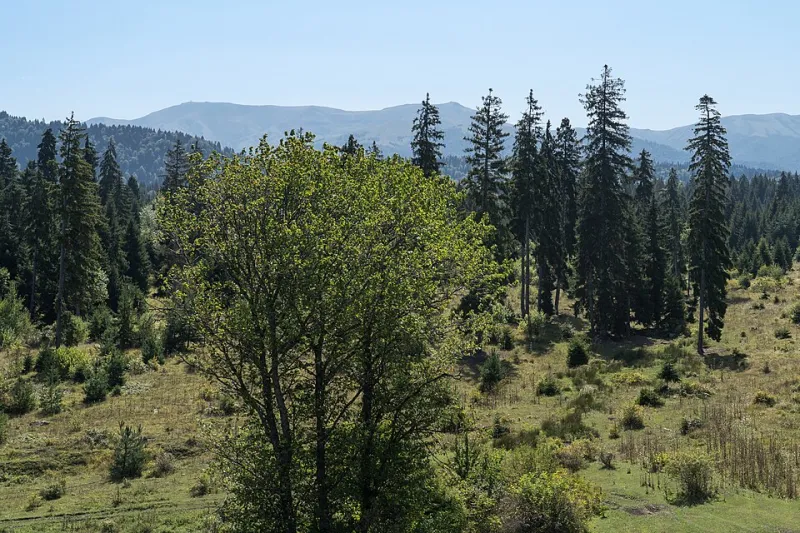
Photo: Alexkom000, CC BY 4.0, via Wikimedia Commons
Somewhere outside Minsk, past a stretch of birch trees that seem to go on forever, there's a building that looks like it hasn't seen a visitor since the Berlin Wall came down. The lobby still has its chandelier. The dining hall still has its long communal tables. In one of the treatment rooms, a chart listing hydrotherapy schedules hangs slightly crooked on the wall, like someone just stepped out for a moment and never came back.
This is one of Belarus's forgotten sanatoriums — and there are a lot more where that came from.
The Soviet Wellness Industrial Complex
If the phrase "Soviet health resort" sounds like a contradiction, that's because most Americans picture the USSR as a place of austerity and grayness. But the Soviets took leisure seriously — at least in theory. The sanatorium system was a cornerstone of Soviet social policy. Workers who met production quotas could earn vouchers, called putevki, that entitled them to weeks-long stays at state-run resorts. These weren't luxury retreats by Western standards, but they were genuine attempts to provide rest, medical treatment, and recreation to the working class.
Belarus, with its forests, mineral springs, and relatively mild climate, became a prime location for these facilities. By the 1970s, the country had hundreds of them — some modest, others genuinely grand, with neoclassical columns, ornate tile work, and sprawling grounds designed to evoke a sense of abundance.
"The sanatorium was supposed to be proof that socialism worked," says Artem, a Minsk-based historian who has spent years documenting these sites. "You were a factory worker, maybe you lived in a small apartment, but once a year you could go somewhere that felt almost palatial. That was the message."
What Urban Explorers Are Actually Finding
The community of urban explorers — people who document abandoned or off-limits spaces, sometimes called "urbex" enthusiasts — has taken a particular interest in Belarus's ghost sanatoriums. Online forums and photo blogs have filled up with images of these places over the past decade, drawing attention from history buffs and architecture nerds across Europe and, increasingly, the US.
What makes these sites so compelling isn't just the decay. It's the specificity of what's left behind. Unlike a generic abandoned building, a Soviet sanatorium is a complete world — one with its own routines, aesthetics, and ideology baked into every detail.
Murals celebrating collective labor still cover dining room walls. Treatment schedules, menus, and recreational activity boards remain pinned in common areas. The furniture, the fixtures, the layout of the rooms — everything reflects a very particular vision of what rest and recovery were supposed to look like under a planned economy.
"You find these little time capsules within the time capsule," says Vera, a photographer from Brest who has documented over a dozen abandoned sanatoriums. "A shelf of books that were approved for guests to read. A game room with chess sets and nothing else. A beauty salon with Soviet-era equipment still in the drawers. It's like the whole ideology of the place is still physically present, even though the people are gone."
Daily Life Between the Treatments
For those who actually stayed in these places during the Soviet era, the experience was a mix of the medicalized and the mundane. A typical stay might involve morning calisthenics, followed by a prescribed series of treatments — mineral baths, mud wraps, inhalation therapy, or electrical stimulation procedures that sound alarming by contemporary standards. Afternoons were for walking the grounds, reading, or socializing in common areas. Evenings often included organized entertainment: film screenings, dances, or amateur theatrical performances.
The social dimension was significant. Sanatoriums were one of the few places where Soviet citizens from different cities and republics regularly mixed. Romances happened. Friendships formed across regional lines. For many people, especially those in more isolated parts of the country, a sanatorium stay was genuinely one of the highlights of the year.
"My grandmother still talks about the sanatorium near Narach Lake," says Dmitri, a Belarusian now living in Chicago. "She went twice in the 1980s. The way she describes it, it sounds almost like summer camp for adults — structured and a little absurd, but also genuinely fun."
The Long Unraveling
When the Soviet Union collapsed in 1991, the sanatorium system didn't disappear overnight — but it began a slow, uneven decline. Some facilities were privatized and renovated, becoming mid-range resorts catering to post-Soviet tourism. Others were absorbed into state institutions or repurposed as hospitals and schools. But a significant number simply... stopped. Funding dried up, maintenance became impossible, and the buildings were left to the elements.
The abandonment reflects something larger about the post-Soviet transition in Belarus. Unlike some of its neighbors, Belarus never fully broke from its Soviet institutional structures. The country still operates a number of state sanatoriums, some of which are genuinely well-maintained and popular. But the ones that fell through the cracks did so quietly, without much public reckoning.
"There's no real conversation in Belarus about what to do with these places," Artem notes. "They're not old enough to feel like ancient history, but they're not functional enough to be useful. They just sit there, which is its own kind of statement."
Why These Places Matter Now
For American audiences, it might be easy to view these ruins as curiosities — exotic remnants of a political system most of us only know from Cold War movies. But the sanatoriums are more than that. They're physical evidence of a genuine, if deeply flawed, attempt to build a society around collective well-being. The ideology that produced them was authoritarian and often brutal, but the sanatoriums themselves were places where real people rested, recovered, and found moments of ordinary happiness.
That complexity is worth sitting with. The next time you see one of those haunting urbex photos — a crumbling ballroom, a rusted hydrotherapy tub, a mural of smiling workers that no one has looked at in thirty years — consider what it actually took to build that place, and what it meant to the people who used it.
The paint is peeling. The chandeliers are dusty. But the stories are still very much there, if you know how to look.