Dumplings, Dialects, and a Second Paycheck: How Belarusian Americans Are Quietly Building Their Own Economy
Dumplings, Dumplings, Dialects, and a Second Paycheck: How Belarusian Americans Are Quietly Building Their Own Economy
Let's be honest: the American side hustle conversation is saturated. Drop-shipping, content creation, reselling sneakers — the internet has covered it. But there's a quieter version of this story happening inside Belarusian diaspora communities across the country, and it looks different from the standard hustle narrative in ways that are genuinely worth paying attention to.
Belarusian immigrants are turning specific cultural knowledge — food traditions, language skills, craft techniques, deep familiarity with a place most Americans couldn't locate on a map — into real supplemental income. And in doing so, they're building something that functions less like a gig economy and more like a small, informal bridge between two worlds.
The Food Side First, Because It's Always the Food
If you've spent any time in a city with a meaningful Belarusian or Eastern European population, you've probably encountered the phenomenon of someone's mother or aunt selling food out of their home kitchen with a small but fanatically loyal customer base. This is not a new thing. But it's expanding, and it's getting more visible.
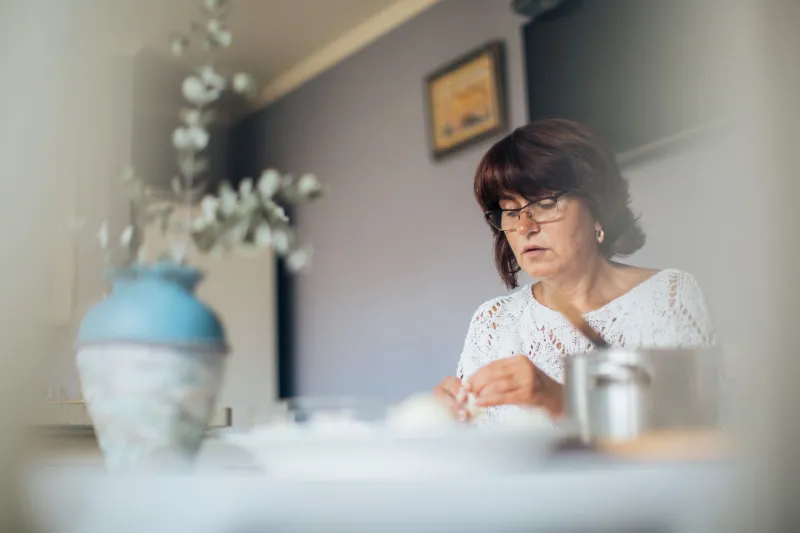
Irina moved to the Minneapolis area from Brest about twelve years ago. She works full-time in healthcare administration. On weekends, she makes varenyky — the stuffed dumplings that are deeply embedded in Belarusian and broader Eastern European food culture — and sells them through a combination of a small Instagram following, word of mouth in the local Slavic community, and occasional appearances at a farmers market that started accepting her after she showed up with samples.
"I started making them just for my family," she says. "Then a neighbor asked if she could buy some. Then her neighbor asked. Now I make maybe two hundred on a Saturday and they're gone by Sunday afternoon."
Her menu has expanded carefully — she added cold beet salad, a couple of fermented pickle options, and occasionally a batch of medovnik, the layered honey cake that requires an almost unreasonable amount of patience. She's not trying to scale it into a restaurant. The side income covers a car payment and a portion of her kids' extracurricular activities. More than that, she says, it keeps her connected to something she'd otherwise lose ground on. "Cooking this food is how I stay Belarusian. The money is nice, but that's not really the point."
Language as a Marketable Skill Nobody Expected
Here's something that surprises people: Belarusian language tutoring is a real market. Small, but real — and growing in specific and interesting ways.
For a long time, the demand was almost entirely internal to the diaspora — parents who wanted their American-born kids to have some connection to the language, or adults who'd lost fluency and wanted to recover it. That market still exists. But in recent years, a second type of student has appeared: people outside the Belarusian community who have specific reasons to learn.
Journalists covering Eastern Europe. Academics doing research. People with Belarusian partners or spouses. Human rights workers with connections to Belarusian civil society. The political situation in Belarus has made the country more visible internationally, and visibility creates demand for language access.
Sergei, who lives in Washington, D.C. and works in IT, started offering Belarusian language sessions online almost by accident. A colleague heard him on a call and asked if he'd ever considered teaching. He set up a profile on a tutoring platform, listed his rate, and within a month had four regular students — none of them Belarusian.
"One of them is a journalist. One is a graduate student studying post-Soviet politics. One is a retired woman who says she just finds the language beautiful and wants to learn something different," he says. "I charge forty dollars an hour and I have sessions three evenings a week. It's not a fortune but it's real money and I find it genuinely satisfying."
He's also noticed that his students often come back with questions that go beyond grammar — questions about culture, about current events, about what daily life actually looks like. "I'm not just teaching language. I'm teaching context. And I think that's actually the more valuable thing I'm offering."
Craft, Embroidery, and the Patience Economy
Belarusian traditional embroidery — the geometric patterns that show up on rushnyky (ritual cloths), clothing, and decorative items — requires a significant investment of time and skill to produce. In Belarus, this knowledge was passed down through generations of women as a matter of cultural survival. In America, it turns out to have a market among people who want handmade objects with genuine heritage behind them.
Vera, based in the Boston area, learned embroidery from her mother in Vitebsk and brought the skill with her when she immigrated in the early 2000s. She sells pieces through Etsy and at craft fairs, and she's developed a small but consistent customer base that includes Belarusian diaspora members buying items for weddings and cultural events, as well as a broader audience of people who appreciate handmade textiles.
"I price my work honestly, which means it's not cheap," she says. "A large rushnik takes me twenty or thirty hours. I'm not going to sell that for forty dollars." Her pieces range from smaller decorative items in the $60–$80 range up to significant commissioned works that can run several hundred dollars. She doesn't make a living from it, but she makes enough to fund her materials, contribute meaningfully to household income, and — she mentions this more than once — feel like her skill has value in the world she actually lives in now.
The Cultural Consulting Nobody Talks About
This one is harder to quantify but worth mentioning. There's a category of Belarusian Americans who find themselves being paid — formally or informally — for cultural knowledge. Consulting for organizations working in Eastern Europe. Advising on content for documentary projects. Helping companies navigate business relationships with Belarusian or broader post-Soviet partners.
This work rarely gets called a side hustle, but that's effectively what it is: leveraging specific cultural fluency that took a lifetime to accumulate and that most Americans simply don't have.
The pattern across all of these stories is similar. The skill or knowledge in question wasn't developed with commercial intent. It was just part of being Belarusian — the food, the language, the craft, the cultural context. The American market, it turns out, has gaps that these particular skills fit into in ways that aren't always obvious until someone asks.
None of the people we talked to are getting rich. That's not really the story. The story is that the things they brought with them — the recipes, the language, the patterns their mothers taught them — have value here. That's not a small thing. For a lot of diaspora members, it's actually a pretty significant one.